
Powered by:

NGT+a user guide
Eliminate the dangers without altering the effectiveness or conventional methods and use of nasogastric tubes in horses
Use of a nasogastric tube in horses is a standard procedure in equine medicine. Despite its frequent use, the procedure carries inherent risks that are often not discussed or observed with the experienced practitioner. But still, the potential for those passing a nasogastric tube to aspirate material from the tube into their airway or succumb to contamination via the oral cavity are threats worth discussion.
Historically, nasogastric intubation has posed an unrecognized threat to the health of veterinarians.3 However, passage of a nasogastric tube has inherent risks that are documented in literature. The most recent case report highlighting real occupational exposure was in 2024 when a document outlined human exposure to contaminated gastric material during equine procedures, illustrating that direct contact with reflux or aspirated material can represent a true zoonotic and health risk.10 Further, when a nasogastric tube is slides along the ventral meatus to the nasopharynx often stimulates horses to cough or gag.
In the authors’ experience and in common practice,7 many veterinarians blow in the tube when it is in the nasopharynx to facilitate introduction of the nasogastric tube tube into the esophagus (i.e., swallowing) and to further advance the nasogastric tube in the esophagus towards the stomach. After successful introduction into the esophagus, and to confirm accurate placement in the esophagus, most veterinarians will aspirate on the tube as a spot check for negative pressure, where this is an indication the tube is correctly placed in the esophagus (whereas passage into the trachea allows aspiration of air without resistance).
Once in the stomach, gastric contents may follow the path of least resistance by ascending the tube in an oral direction. If a cough is stimulated after the cardiac sphincter is breached, or if the stomach is under pressure, veterinarians are at risk of aspirating material into their oral cavity or airways if the nasogastric tube is in their mouth. For example, inhalation of mineral oil, a common product administered via nasogastric tube to treat colic, can lead to lipoid pneumonia in humans.9 Furthermore, veterinarians often find themselves passing nasogastric tubes on horses that present with fever or diarrhea, signs that may be caused by zoonotic bacteria including Salmonella sp,8 Clostridium difficile,8 Cryptosporidium parvum,5 group A rotavirus,2 and Streptococcus equi subspecies.4
Moreover, nasogastric tubes are rarely disinfected or sterilized properly, which increases the chance of potential zoonotic infection.3 When treating horses that have ingested toxic compounds, veterinarians are at risk of developing clinical signs such as pulmonary edema after oral contamination from stomach contents passing through the nasogastric tube.3 The purpose of this paper is to familiarize veterinarians with the use of a backflow diverter, the NGT+a that was developed to increase biosecurity and serve as a barrier between human operators of nasogastric tubes, thus eliminating the risk of exposure to noxious materials and zoonotic diseases from horses (Figure 1).
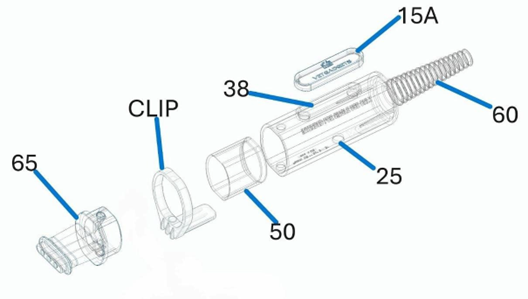
Figure 1. The back flow diverter NGT+a has 7 principal components:
- 15A – air channel cover
- 25 – exit port
- 38 – air channel
- 50 – sliding member
- 60 – ridged variable sized nasogastric tube attachment
- 65 – mouthpiece
- Clip
Materials and methods:
The NGT+a is a personal protective medical device developed by an equine veterinarian that attaches to the oral end of a nasogastric tube to eliminate accidental aspiration of contents that may be harmful to veterinarians (Figure 1). The device has an internal sliding mechanism that integrates a beveled contour that is dimensionally designed to form a seal at the mouthpiece with pressure changes from the nasogastric tube (fluid or air), forcing it to slide in an oral direction.
The dimensionally congruent seal between the mouthpiece and the slide creates an effective barrier between nasogastric tube contents and the veterinarian while opening an exit port to exhaust to the outside. The core sliding mechanism has 2 positions: the upward sealed position with open exit port (Figure 2), or the downward position that closes the exit port and opens the air channel bypass (Figure 3). The downward position facilitates air flow from the veterinarian’s mouth down the tube, while the upward position creates a seal and a bypass system that diverts air flow from the horse’s stomach to an exit port in the NGT+a, thereby avoiding inhalation of air or fluids by the veterinarian.
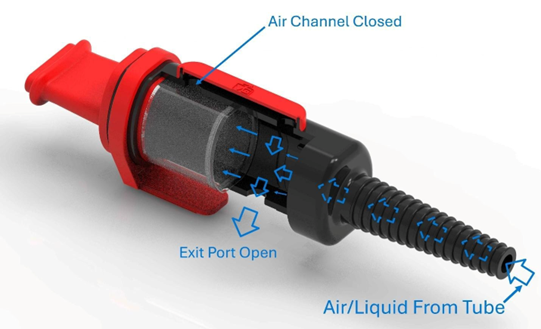
Figure 2. Open Position. The exit port of the NGT+a is shown in an open position to allow for air and liquid to bypass the mouth of the user.
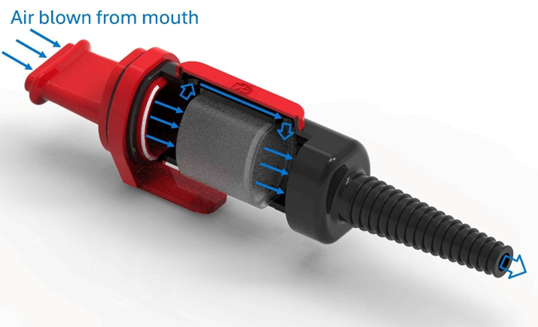
Figure 3. Downward Position. The air channel is open while the exit port of the NGT+a is shown in a closed position when the user blows air into the nasogastric tube.
There are many manufactured features included for convenience for everyday practice. The NGT+a includes a clip that can attach to the halter on the horse for an easy way to hold the device in an upright position, keeping the internal mechanism free from fluid contamination leaving the tube during the procedure.
The tube connection mold has a graduated circumferential design to accommodate various nasogastric tube sizes. The NGT+a used in this study is made of a lightweight medical grade polymer that is not affected by high or low environmental temperatures (Figure 4).
However, when tested in a steam autoclave the mouthpiece (65, Figure 4) of NGT+a will melt, but every other component appears to survive 122 oC or 250 oF.
On the other hand, this device does not degrade in veterinary disinfectants and there are no apparent issues with plasma or ETO sterilization.
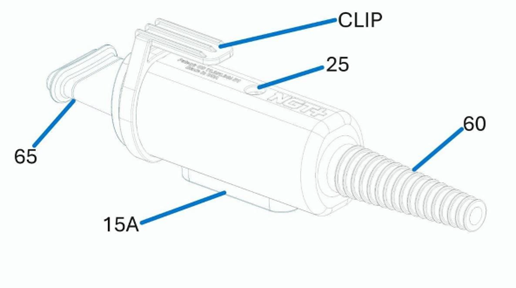
Figure 4. Assembled NGT+a
- 15A – air channel cover
- 25 – exit port
- 60 – ridged variable sized nasogastric tube attachment
- 65 – mouthpiece
- Clip
The NGT+a securely attaches to the end of a nasogastric tube for a tight, but removable connection that allows for a hands-free introduction of the nasogastric tube into the stomach. The exit port is closed while air is being blown into the tube to open the esophagus and facilitate passage of the nasogastric tube. When aspirating or checking for negative pressure, the sliding member will not change and resistance will be noted. Upon the sudden or forceful increase in pressure from the nasogastric tube, the core sliding member of the NGT+a moves up and seals the mouthpiece simultaneously while the exit port is uncovered in an open position allowing air and liquid to leave the device while bypassing the mouth of the veterinarian performing the tubing procedure, reducing the risk of oral contamination. The NGT+a is easily attached and detached from the tube so that all other aspects of passing a nasogastric tube on a horse may be carried out as normal.
As previously discussed, the NGT+a can be cleaned and it is safe for ethylene oxide sterilization, but it is important to avoid getting liquid into the main body of the device to maintain its proper function. To accomplish this, use of the clip becomes very important to keep the device in an upright position. The NGT+a does not alter the procedure of nasogastric intubation; rather, it is designed to only be an interface in this process, making it a safer procedure for veterinarians who use nasogastric tubes in their practice.
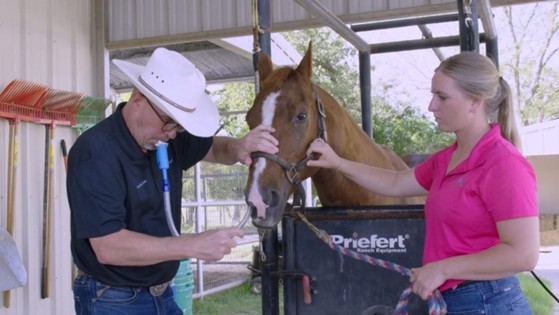
Figure. 5. The NGT+a is substituted for the aboral end of the nasogastric tube in the mouth of the practicing veterinarian while connected to the nasogastric tube in the horse.
To use the NGT+a, the device is securely placed on the oral end of the nasogastric tube and placed into the operator's mouth. The nasogastric tube is introduced into the central aspect of the ventral meatus via a nostril and then passed up the ventral meatus through the nasopharynx to the oropharynx; a swallow indicates the nasogastric tube has reached the appropriate location for introduction into the esophagus.
The horse’s head is placed in an upright position with the nares to the left shoulder while the nasogastric tube is advanced slowly in an aboral direction. A swallow facilitates passage into the esophagus by blowing in the tube (insufflation) via the NGT+a to create positive pressure to dilate the esophagus aboral to the end of the nasogastric tube thereby reducing esophageal resistance for passage of the tube. Resistance is encountered at the cardiac sphincter before entry to the stomach.
Once the stomach is accessed via the cardiac sphincter, any air that flows retrograde up the nasogastric tube in an oral direction will be redirected by the NGT+a through an exit port and away from the mouth of the operator.
The NGT+a can then be removed from the nasogastric tube to connect to a pump to administer fluids or other treatments via the nasogastric tube and into the stomach. After disconnecting the nasogastric tube from the stomach pump, the NGT+a can be reattached to the nasogastric tube. Air can then be blown through the NGT+a into the tube to deliver the remaining fluid contents from the tube into the stomach. Then, the nasogastric tube can be kinked and removed from the horse.
Results:
The NGT+a serves as a protective barrier between the practicing veterinarian and the horse being treated. The NGT+a has an integral seal mechanism to minimize the risk of air flow or fluids from a horse’s airways, esophagus, or stomach from inadvertently entering the oral cavity or airways of the veterinarian placing the nasogastric tube. The seal between the mouthpiece and the internal sliding piece of the NGT+a serves as a sanitary barrier between the horse and the veterinarian using a nasogastric tube, reducing the risk of exposure to noxious materials.
Since its development, the NGT+a has been used on several hundred horses. The most common reported finding from operators using the NGT+a, was the diversion of retrograde air from the nasogastric tube away from the operator when horses coughed. The NGT+a was tested on 100 horses of various ages that required nasogastric tube treatments with anthelmintics, mineral oil, or fluids without difference compared to conventional methods of tubing. In all of these cases, the NGT+a was used to blow the fluid contents into the stomach; however, on multiple occasions, there was fluid that flowed retrograde up the nasogastric tube towards the operator and was forced out the NGT+a away from the operator's mouth. One case was reported where the device was left attached to the tube, which fell to the ground, and fluid contents from the nasogastric tube drained into the NGT+a causing it to become nonfunctional. During the testing and use of the NGT+a for all of the horses, no oral or airway contamination for veterinarians was observed.
While the NGT+a was originally intended to be disposable, during the testing period, operators simply removed the mouthpiece from the main body of the device and wiped out any moisture that accumulated during the procedure for reuse. The NGT+a was allowed to air dry and it was sterilized using a sterile sleeve and an ethylene oxide sterilizer. Although this was effective in this particular instance, the air channel cap is the only compartment that cannot be breached for cleaning; thus, the sterility is compromised after the air channel cap becomes contaminated. Thus, any NGT+a that was contaminated with retrograde fluids of any kind was discarded during the testing period.
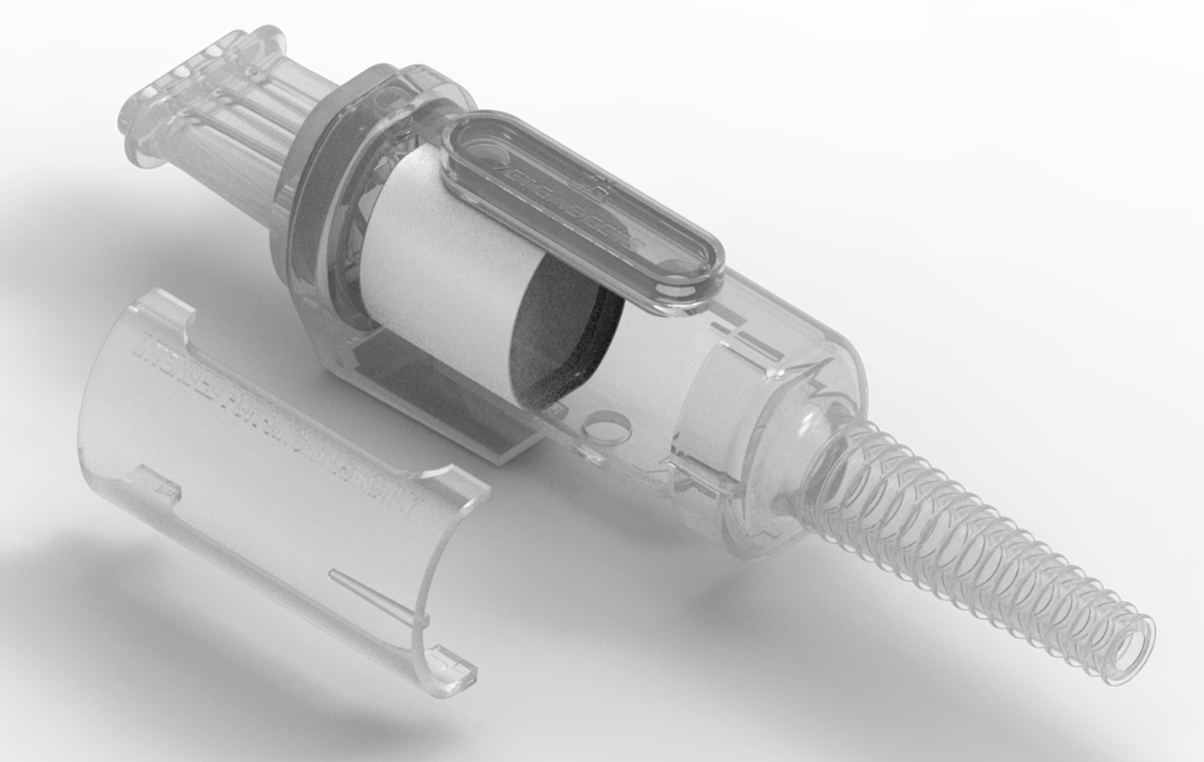
Figure. 6. Complete image of the actual device. The high-definition rendering shows an open side that is for demonstration only.
The use of a NGT+a (Figure 6) offers a safer alternative to equine veterinarians who prefer to place their mouth on a nasogastric tube for placement in horses. The NGT+a enables safer use of a nasogastric tube without compromising efficiency of the process.
One of the primary benefits of the NGT+a is its ability to minimize the risk of oral contamination and thus, the transmission of zoonotic microbes, which is a common concern with conventional methods of treatment during routine nasogastric intubation procedures. By incorporating a secure, hygienic oral attachment that reduces the need for direct contact with the nasogastric tube, the NGT+a attachment eliminates the risk of veterinarians accidentally aspirating dangerous substances like gastric contents, toxins, or medications. This is particularly crucial in cases where horses are suspected of having zoonotic infections like Cryptosporidium5, Rotavirus2, or Salmonella.6
Furthermore, even healthy horses pose a zoonotic risk for infection with either S. equi subspecies zooepidemicus4 or Salmonella.1 Additionally, the NGT+a can improve the accuracy and ease of nasogastric tube placement by providing the feedback about proper placement and passage of the nasogastric tube by allowing veterinarians to safely insufflate or aspirate through the tube. Overall, the NGT+a enhances both the safety and effectiveness of nasogastric intubation procedures, providing a significant benefit to human health through safer veterinary practices.
The purpose of this study was to inform the profession of a new technology that is available for equine veterinarians to improve safe use of a nasogastric tube. The authors recognize that further study is needed to determine the extent to which airborne microbes can contaminate the device leading to contamination of the mouthpiece.
Although the seal formed at the mouthpiece is airtight, additional studies could be conducted on the air contents exposed to the operator when creating negative pressure on the nasogastric tube.
Watch a short demonstration video on how to properly use the NGT+a.
References:
- American Association of Equine Practitioners. Salmonellosis. American Association of Equine Practitioners. 2024. Available at: https://aaep.org/wp-content/uploads/2024/02/Salmonellosis.pdf. Accessed March 8, 2025.
- Carossino, M., Vissani, M. A., Barrandeguy, M. E., Balasuriya, U. B. R., & Parreño, V. (2024). Equine rotavirus A under the One Health lens: Potential impacts on public health. Viruses, 16(1), 130. https://doi.org/10.3390/v16010130.
- Drozdzewska, K., Potocnik, E., & Schwarz, B. (2020). Nasogastric intubation as health and safety risk in equine practice—a questionnaire. J Equine Vet Sci, 88, 102951. https://doi.org/10.1016/j.jevs.2020.102951.
- Franceschi, G., Soffritti, A., Mantovani, M., Digaetano, M., Prandini, F., Sarti, M., Bedini, A., Meschiari, M., & Mussini, C. (2024). Streptococcus equi subspecies zooepidemicus endocarditis and meningitis in a 62-year-old horse rider patient: A case report and literature review. Microorganisms, 12, 2201. https://doi.org/10.3390/microorganisms12112201.
- Galuppi, R., Piva, S., Castagnetti, C., Sarli, G., Iacono, E., Fioravanti, M. L., & Caffara, M. (2016). Cryptosporidium parvum: From foal to veterinary students. Vet Parasitol, 219, 53–56. https://doi.org/10.1016/j.vetpar.2016.02.001.
- Hird, D. W., Casebolt, D. B., Carter, J. D., Pappaioanou, M., & Hjerpe, C. A. (1986). Risk factors for salmonellosis in hospitalized horses. J Am Vet Med Assoc, 188(2), 173–177. PMID: 3700214.
- Munsterman, A. (2025). Nasogastric intubation in horses. In Emergency procedures in horses. Merck Veterinary Manual. Available at: https://www.merckvetmanual.com/emergency-medicine-and-critical-care/emergency-medicine-in-horses/emergency-procedures-in-horses. Accessed March 10, 2025.
- Pusterla, N., et al. (2010). Intestinal parasites of horses. Vet Clin North Am Equine Pract, 26(1), 69–80. https://doi.org/10.1016/j.cveq.2009.11.003.
- Simmons, A., Rouf, E., & Whittle, J. (2007). Not your typical pneumonia: A case of exogenous lipoid pneumonia. J Gen Intern Med, 22(11), 1613–1616. https://doi.org/10.1007/s11606-007-0280-7.
- Renee, C. et. al. Human Exposure to Equine Halicephalobus gingivalis in an Occupational Context. Zoonotic Diseases. 2024, 4, 310-314.
a. NGT+, a novel backflow diverter adapter for nasogastric tubes, VetGadgets, College Station, TX, USA 77845.